
Bleeding Gums, Hidden Bacteria, and Your Heart – What Every Patient Searching “Endodontist Near Me” Needs to Know
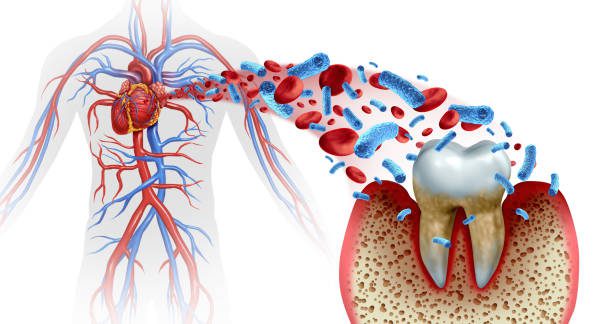
You’ve probably seen the headlines or that viral post making the rounds: the same bacteria wrecking your gums might be quietly working its way into your arteries. It sounds dramatic, but the numbers back it up. In one clinical study, Porphyromonas gingivalis (P. gingivalis) turned up in 90.9% of patients experiencing progressing acute coronary syndrome—what most of us call a heart attack—compared to just 37.5% in folks with normal arteries.
Here at Lowry Endodontics in Denver, Colorado, we see patients every week who come in for a “routine” tooth issue only to learn there’s a bigger story. Dr. Rahim Karmali built his practice around one simple idea: deliver painless, high-quality care that saves natural teeth others might recommend pulling. And yes, that approach can play a real role in protecting more than just your smile. We treat folks from all over Colorado and patients who fly in from across the country because they want a second opinion before saying goodbye to a tooth.
The Bacteria That Travels from Gums to Arteries
P. gingivalis isn’t some rare bug—it’s the main player in chronic gum disease. When gums bleed (even if it’s “just a little” when you brush), this bacterium slips into your bloodstream. Once there, it embeds in artery walls, stirs up ongoing inflammation, speeds up plaque buildup, and raises heart attack risk by about 34%.
The American Heart Association’s latest 2025 scientific statement on periodontal disease and atherosclerotic cardiovascular disease lays it out clearly: untreated gum disease is linked to higher odds of heart attack, stroke, atrial fibrillation, and other major events. Treating the oral infection can help dial down that systemic inflammation.
It’s not about fear. It’s about connecting the dots most people (and even some dentists) miss.
Root Canal Infections and the Heart Connection
You asked specifically about bacteria from root canal infections, and the science is catching up here too. Chronic apical periodontitis—an infection at the root tip—lets oral bacteria (including species like Enterococcus faecalis and others commonly found in infected canals) enter the bloodstream. Recent reviews and meta-analyses show patients with untreated or poorly managed endodontic infections face a modestly higher risk of cardiovascular issues, with some pooled data suggesting a 32% increased relative risk.
The good news? Successful root canal treatment appears to do the opposite. A 2025 study highlighted by the American Association of Endodontists found that properly cleaning and sealing an infected tooth can actually lower markers of systemic inflammation, improving blood sugar and cholesterol levels that tie directly to heart disease and diabetes risk.
In other words, saving the tooth the right way doesn’t just keep your bite intact—it can quiet a hidden source of whole-body stress.
Why “Save the Tooth” Is More Than a Slogan
At Lowry Endodontics we specialize in restoratively driven endodontics. That means using CBCT imaging, laser-enhanced disinfection, and precise techniques to rescue teeth that general dentists often label “hopeless.” We’re not anti-implant. We just believe in giving every salvageable tooth a fair shot first.
Here’s why it matters for your heart (and your wallet):
• Lower lifetime cost: A well-done root canal and crown usually runs far less than extraction, grafting, and implant placement ($4,000–$10,000+).
• Fewer surgical risks: Especially important if you have diabetes, take bisphosphonates, or face other medical hurdles that make implants trickier.
• Natural feel preserved: Your own tooth keeps proprioception (that subtle “sense” of biting) that implants can’t match.
• Proven long-term success: Properly treated endodontic teeth hit 87–93% survival rates over 8–10 years, rivaling implants while cutting inflammatory load.
We see it all the time: a patient shows up with pain or a tooth their dentist said needed pulling. After careful evaluation and treatment, the tooth stays put, symptoms and infection vanish, and they walk out knowing they’ve taken a proactive step for both oral and overall health.
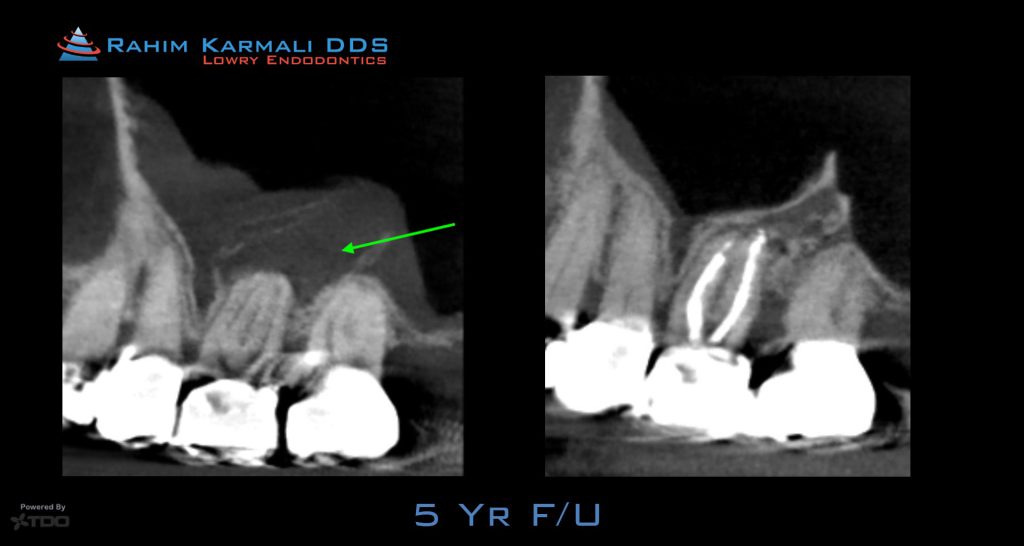
This patient had a severe root canal infection that invaded her sinus. Careful treatment with laser disinfection was performed. At the 5 year follow up, her symptoms were gone, the sinus floor re-established and her maxilla regenerated.
What You Can Do Right Now
If a lingering root canal infection or tooth pain has you worried, don’t wait.
• Schedule a thorough endodontic check-up.
• Come in for a second opinion. Self-referrals are routine here and a big part of what we do.
• Ask about advanced disinfection methods that go beyond standard root canal care.
Lowry Endodontics serves the entire Denver metro, all of Colorado, and patients who travel for this level of expertise. Whether you’re local in Denver or coming from farther afield, Dr. Karmali and his team focus on one goal: predictable, comfortable results that help you keep your natural teeth.
Ready to connect the dots between your mouth and your heart? Visit www.lowryendo.com today. A quick consultation or second opinion could be the step that protects both your smile and your cardiovascular health for years to come.