
Why Choose an Endodontist for Your Root Canal Instead of Your General Dentist
Key Takeaways:
Your general dentist is still your primary dentist. The question is not who is “better.” It is who should handle this particular tooth.
Endodontists complete two to three extra years of residency after dental school and spend their days on diagnosis, root canals, retreatments, cracks, and trauma.
In our experience, in about 30% of our evaluations, root canal treatment is not needed or is not the best treatment. An honest workup often changes the plan.
Magnification, 3D imaging, and thorough disinfection are not extras. They are how you find hidden canals, confirm a crack, or decide the tooth does not need a root canal at all.
A second opinion is ordinary, responsible care. You do not need a referral to be evaluated at Lowry Endodontics in Denver.
The Question Is Narrower Than It Sounds
If your dentist just said you need a root canal, it is reasonable for you to wonder whether you should stay in that chair or see a specialist.
Most of the time, this is not a loyalty test. Your general dentist is the person who knows your mouth year after year. They do your cleanings, fillings, crowns, bite, gums. That relationship matters. Many excellent dentists do straightforward root canals well, especially on front teeth with simple anatomy.
The useful question is smaller: for this tooth, with this pain or this x-ray, who is in the best position to decide what is actually going on, and then treat it at the level the tooth needs?
That is why people choose an endodontist. Not because general dentists are unskilled. Because root canal problems are easy to misread, and the treatment is easy to under-do…or over-do.
What Extra Training Actually Buys You
After dental school, a general dentist can go straight into practice and treat the whole mouth. An endodontist goes back for two to three more years of specialty residency. The work is almost entirely the inside of the tooth: pulp, canals, infection at the root tip, cracks, resorption, trauma, and teeth that already had a root canal and still hurt.
Volume follows training. A busy general office may do a few root canals a week between everything else. An endodontist does this work all day. Difficult molars, calcified canals, extra canals in upper first molars, and retreatments are not rare events. They are Tuesday.
That repetition shows up in small decisions: how wide to open the tooth, when to stop and take another scan, whether the pain is the tooth or the sinus, whether a crack has split the root. Those decisions are the difference between saving a tooth and committing you to an extraction you did not need.
The 30 Percent You Do Not Hear About
Here is the part patients are rarely told before they book a root canal…
In our experience, in about 30% of our evaluations, root canal treatment is not needed or is not the best treatment.
Sometimes the nerve is irritated but recoverable. Sometimes the pain is a crack that needs a crown, not a root canal. Sometimes it is sinus pressure, a gum problem, or a different tooth than the one that was pointed to on a two-dimensional x-ray. Sometimes a tooth was labeled hopeless and an implant was already discussed, and the careful evaluation reveals a savable tooth.
That is not a sales statistic, in fact, it is the opposite. It is what happens when you slow down and let the diagnosis lead. An ethical evaluation has two possible honest answers: treat, or do not treat this way. If every consult ends with the same procedure, the consult was not doing enough work. We will not “sell” you a root canal treatment.
If you want the symptom list that brings people in, start with Top Signs You Might Need a Root Canal. Signs are a starting point. They are not a treatment plan.
Why Technology Changes the Conversation
You cannot treat what you cannot see.
A standard dental film is a shadow. Extra canals, the true size of an abscess, a vertical crack, and resorption hide in that shadow. High-resolution cone-beam CT (CBCT) gives a 3D map of the tooth and the bone around it before anyone picks up a file. Often the scan is what tells us a root canal is not the next step.
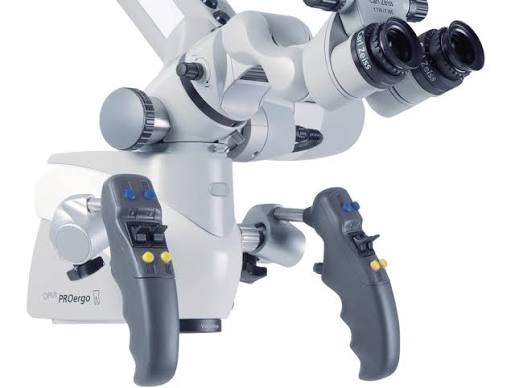
During treatment, a surgical operating microscope is not a luxury. Canals can be thinner than a hair. Missed anatomy is one of the most common reasons a “finished” root canal fails later. Magnification and light are how those spaces get found.
Disinfection is the other half. Files shape the main canals. They do not reliably clean the fins and lateral anatomy where bacteria hide. At Lowry Endodontics we use the Fotona LightWalker laser with SWEEPS to drive irrigant into that anatomy. The laser does not replace chemistry. It helps proven irrigants reach farther. Details are on our technology page.
None of this makes a simple case complicated. It makes an uncertain case honest.
General Dentist or Endodontist: A Practical Comparison
Use this when you are deciding where to start.
| Question | General dentist | Endodontist |
| What they spend their week doing | The full range of dentistry | Diagnosis and treatment inside the root |
| Training after dental school | Continuing education | 2–3 year specialty residency |
| How often they do root canals | Occasionally, among many other procedures | All day |
| Imaging | Usually 2D x-rays; some offices have CBCT | High-resolution CBCT when the anatomy or diagnosis is unclear |
| What they can see during treatment | Eyes or loupes | Operating microscope, every treatment |
| Best fit | Simple, visible anatomy; a tooth your dentist already knows well | Molars, curved or calcified canals, cracks, retreatments, trauma, “I’m not sure” |
| What a good eval visit should include | Clear reason for treatment and a plan if it does not settle | Enough time to confirm you even need a root canal and discuss the details |
Do you notice the last row? The first job is not to start. It is to be sure.
When staying with your dentist is reasonable: a straightforward front tooth or premolar, open canals on the film, a dentist who already uses a rubber dam and is honest about the limits of the case.
When a specialist visit is the careful move: a molar, a tooth that already had a root canal, pain that does not match the x-ray, a crack, swelling, a recommendation to extract and implant, or any plan that feels rushed.
For the broader roles of each provider, we also keep a longer primer here: Endodontist vs Dentist.
What “Specialist Care” Should Feel Like
The letters after someone’s name tell you they finished a residency. They do not tell you how the office runs.
Ask a few plain questions of any endodontist you visit, including us:
- Will you look at a 3D scan if the regular x-ray leaves questions?
- Do you use a microscope for every treatment, or only the “hard” ones?
- If the tooth needs time with medication inside the canals, will you do that, or are most cases treated in a single visit?
- Do you do separate evaluations or do you evaluate and treat at the same visit?
Those questions are not a quiz. They are how you tell the difference between a title and a protocol. Careful treatment takes time. Our office is built around one patient at a time for that reason. We would rather finish fewer teeth well than move you through a slot.
If saving the tooth is the question hanging over the visit, read Root Canal vs Implant and Don’t Extract Yet. Extraction is permanent. A second look is not.
A Second Opinion Is Not an Insult
Patients sometimes worry they are being disloyal if they ask another doctor to look.
You are not. Dentistry is full of close calls. Pain refers. Films overlap. Cracks hide. Two trained people can look at the same tooth and still benefit from a 3D scan and a microscope exam before anyone commits you to treatment.
We welcome second opinions at Lowry Endodontics. No referral is required. Many patients come after being told they need a root canal, a retreatment, or an extraction. Some leave with a treatment date. Some leave with a monitoring plan and a tooth that does not need to be opened. To us, both outcomes are a successful visit.
Call 303-363-7668 or request a time at lowryendo.com/contact-us. You will hear the honest findings in plain language before anyone asks you to decide.
FAQ
Because the specialty is built around this problem: extra residency training, daily repetition, and technology that make hidden anatomy and uncertain diagnoses visible. Your dentist remains the right person for most of your care. This tooth may need a narrower skill set.
Yes, especially on simpler teeth. Many dentists are careful and refer the cases that do not fit that description. The risk is not “dentists cannot do root canals.” The risk is treating a complex or misdiagnosed tooth as if it were simple.
No. You can refer yourself to Lowry Endodontics. If you already have films or a treatment plan from your dentist, bring them. We will still ensure quality a examination and imaging to give you an honest and careful opinion.
That is one of the better times to come in. In our experience, in about 30% of our evaluations, root canal treatment is not needed or is not the best treatment. Finding that out before the tooth is opened is the whole point of the visit.
The specialist fee can be higher initially. However, a missed canal, a tooth treated that never needed it, or an extraction that could have been avoided is way more expensive in the long run. Due to the time we spend with you, the technology we have, and the specialized care we offer, we are fee-for-service and out-of-network. We will submit your dental insurance claim for you and assist you in the process of maximizing your benefits.
High-resolution CBCT, a surgical operating microscope for every treatment, and LightWalker SWEEPS laser disinfection, plus an immediate seal and follow-up until healing is documented, not assumed. See Endodontic Technology.